

Branded jewellery is extremely desirable on the secondary market. Long standing and well-regarded names such as Cartier, Tiffany & Co., Van Cleef & Arpels and Bulgari instantly conjure to mind style, craftsmanship, brand heritage and visual appeal.
But, when it comes to buying at auction, do these famous names hold their value, and are they worth more than non-branded pieces? Often, the answer is yes, but not always.
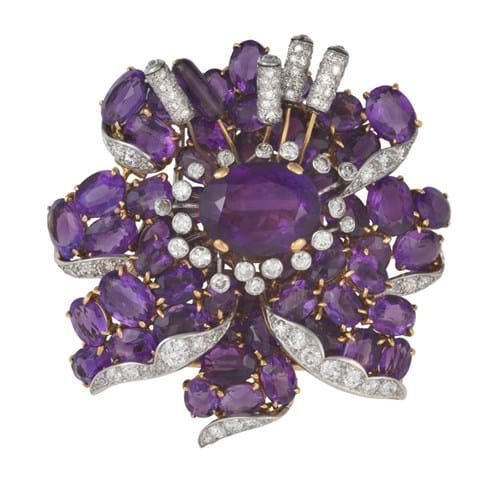
An Amethyst and Diamond Brooch, by Cartier (sold for £11,000 plus buyer’s premium)
At auction, branded jewellery tends to attract strong interest because the names are recognised and trusted. The brand image, encompassing the style, materials, and even the packaging can be distinctive and recognisable. This translates into buyer confidence, which is in turn reflected in the number of competitive bidders we ordinarily see on branded items going through our auctions. A signed or attributed item from the brands already mentioned, amongst others, always attracts significant interest. If offered with the original box and packaging, and receipts or documentation, then so much the better.
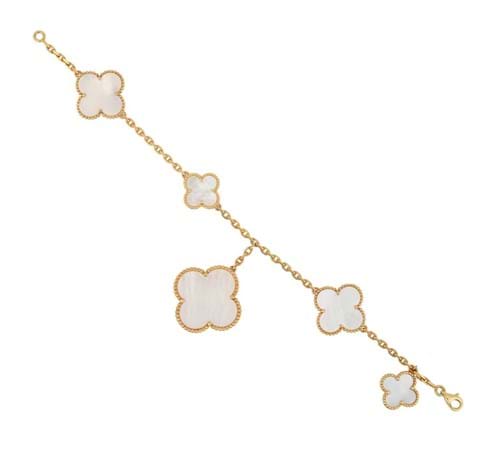
A Mother-of-Pearl Magic Alhambra Bracelet, by Van Cleef & Arpels (sold for £5,000 plus buyer’s premium)
Collectors and followers of these brands keep a watchful eye on auctions, and there is no shortage of enthusiasts looking to buy a piece of prestige jewellery for lower than full retail price. Additionally, auctions provide the opportunity to purchase items from retired collections or previous designers for that brand.
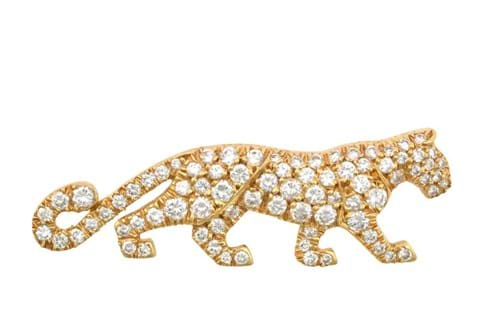
A Diamond Panthère Pin, by Cartier (sold for £3,500 plus buyer’s premium)
What of non-branded items then? Does this mean that there is less interest in those? Certainly not, but the price point is different. As an example, a diamond solitaire ring by Tiffany & Co. will be worth more at auction than a ring from a high street jeweller, even if it is of comparable quality, with a diamond of the same size and quality grades. In fact, some jewellery that is from less well-known makers, or unsigned even, can have superior workmanship, and may utilise fine quality stones that the famous brands might prefer to reserve for their high jewellery collections.
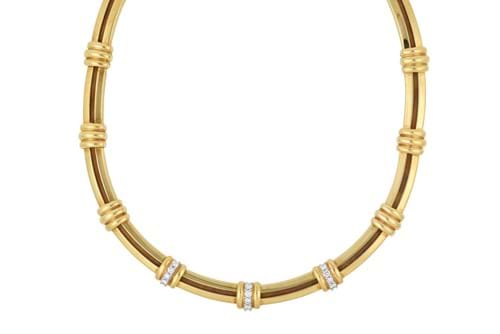
A Diamond Atlas Necklace, by Tiffany & Co. (sold for £4,500 plus buyer’s premium)
In reality, auctions also provide bidders and interested parties with an opportunity to compare branded and non-branded goods. If the bracelet that looks visually stunning, fits perfectly, sits beautifully on the wrist, and is easy for the individual to fasten and unfasten is the one that is preferred, then the lack of a “name” is less relevant than making an informed buying decision as to the maximum bid.
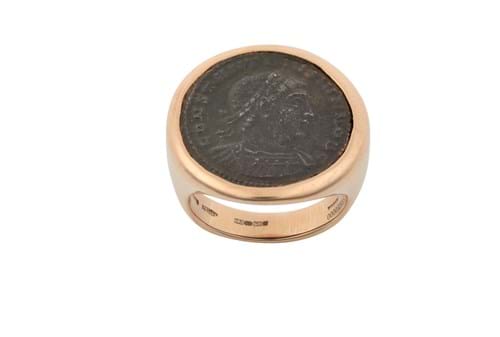
An 18 Carat Rose Gold Roman ‘Monete’ Ring, by Bulgari (sold for £2,800 plus buyer’s premium)
Antique items or those with interesting provenance can garner greater attention than a similar branded piece, as the bidders look for something more unusual, with age and history, or with an interesting story attached.
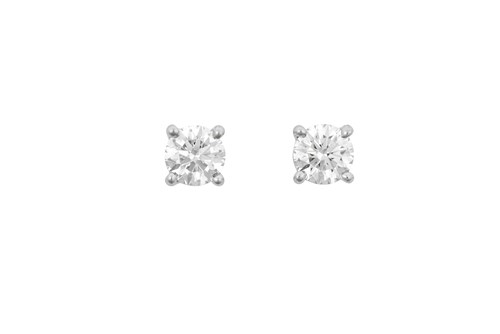
A Pair of Platinum Diamond Solitaire Earrings, by Tiffany & Co. (sold for £950 plus buyer’s premium)
For vendors, selling a branded piece could well achieve a larger percentage of the original retail value. Whilst this is not normally a consideration when making a purchase, if a piece is being considered as an investment as well as for use, it is worth bearing in mind.
A signature is part of the picture, not the full story.
Entries now invited for the 2026 programme of sales.