
While decorative hair combs have existed since ancient times, the elaborate hairstyles of the 19th century brought them to the forefront of fashion. In the early 1800s, one of the ways in which status was conveyed amongst aristocratic women was through tall, complex hairstyles which required multiple hair combs to hold them in place. Originally, these were small and modest, primarily constructed from metal. However, as the century progressed, they became increasingly complex and ornate and were soon adopted by the prosperous middle classes. Combs were produced in an array of materials including tortoiseshell or its cheaper alternative, horn, and adorned with precious, semi-precious or paste stones. Following the death of Prince Albert, Queen Victoria popularised black hair combs made of jett or gutta percha (tree sap), and hair combs became pieces of sentimental jewellery. Following in the footsteps of the queen, mourning attire became a way in which Victorian women could simultaneously convey wealth and respectability.
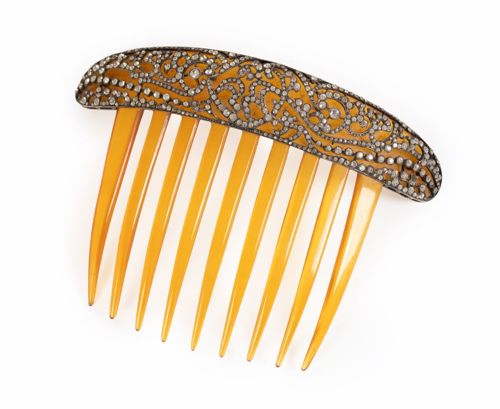
A 19th Century Blond Horn Hair Comb (estimate: £100-150 plus buyer's premium)
From the late 1840s onwards, there was a growing fascination with archaeology, and important excavations and discoveries inspired the creation of archaeological styles. This led to a taste for Roman, Etruscan and Greek motifs, such as scarabs, lotus flowers or amphorae, being depicted on hair combs using enamel or pique inlay. However, the influences on hair comb trends were diverse, ranging from Orientalism in the Aesthetic Movement to the Gothic of high Victoriana.
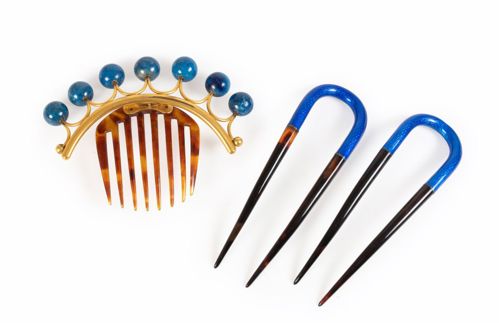
Victorian Gilt Metal Etruscan Style Hair Ornament, and two similar tortoiseshell combs (estimate: £80-120 plus buyer's premium)
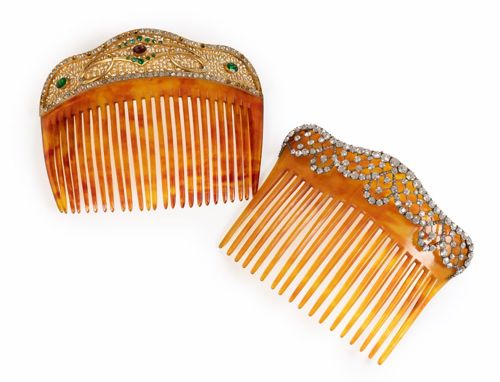
Two 19th Century Decorative Tortoiseshell Hair Combs (estimate: £120-180 plus buyer's premium)
From the mid-19th century, hinged hair combs began to appear, allowing the heading of the comb to sit at a ninety-degree angle to the tines. At a similar time, Peigne Josephine combs came into fashion, name for their similarity to those worn by Empress Josephine Bonaparte and characterised by the ball decorations that adorned them. As other more elaborate styles appeared, like the very large Spanish mantilla comb, hair combs became a source of ridicule in contemporary newspapers and satirical cartoons. The fashionable women in such drawings were depicted as blocking traffic and even causing injury to pedestrians with their over-sized hair adornments.
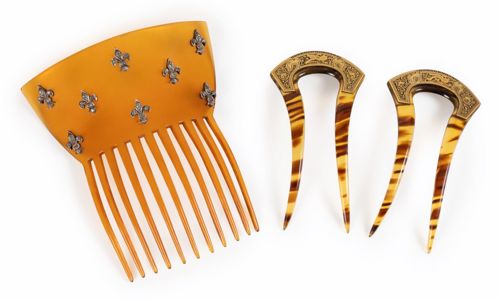
Late 19th/Early 20th Century Hair Combs (estimate: £100-150 plus buyer's premium)
At the turn of the 20th century, hairstyles became softer and more restrained with the chignon and Gibson Girl rolls serving as prime examples. Combs that supported these hairstyles were manufactured in Art Nouveau styles and utilised the wealth of new synthetic modern materials. Asymmetry, filigree and metal overlay became popular design features. Diamonds became a favoured embellishment for the wealthy, which sparkled under the new electronic lighting and were often set alongside turquoise in tortoiseshell combs. This in turn led to the production of more affordable emulations using celluloid and non-precious stones. The 20th century also saw the emergence of the Neo-Rococo style, and the new two-pronged hair pins alongside combs and tiaras were now being decorated with filigree overlays of scrolls and volutes.
An extensive private collection of hair combs will be included in the Fashion, Costumes and Textiles sales in 2026 and 2027, and the first ten lots will be offered in the 20th November sale.
With thanks to Freya Rose for writing this blog, and who recently completed an internship at Tennants.